


The Resilience Blind Spot: Why Energy, Engineering and Infrastructure Leaders Are Solving the Wrong Problem

Charlotte Whitehouse
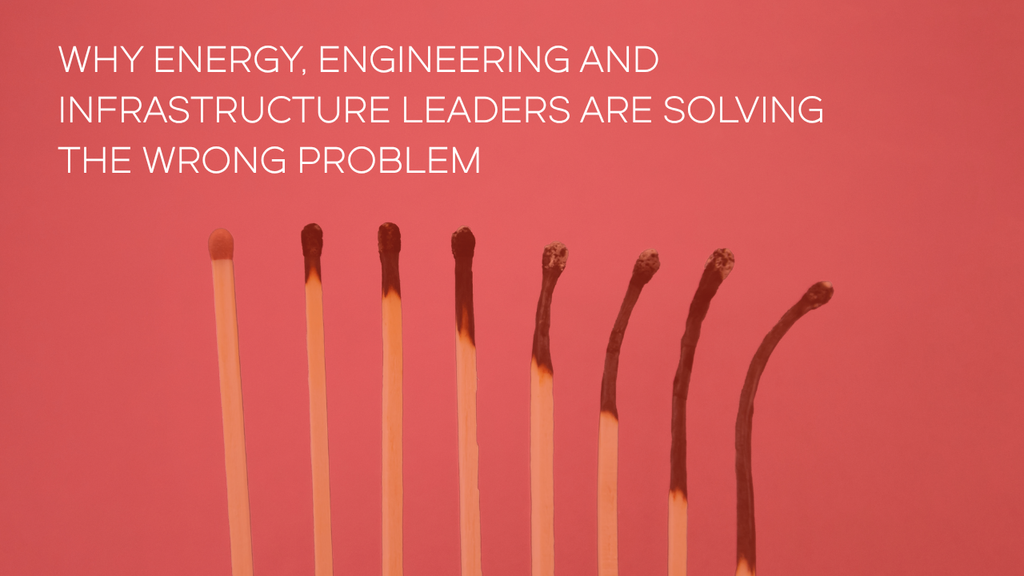
Ask any leader in energy, engineering or infrastructure how they manage risk, and they’ll talk fluently about safety cases, permit-to-work systems, and near-miss reporting. These industries have spent decades engineering physical risk out of the system. What they haven’t engineered out, and largely haven’t tried to, is psychological load. That gap is starting to cost them.
The numbers make the scale hard to ignore. Deloitte’s research shows 63% of UK employees now exhibit exhaustion, disengagement or reduced performance, up from 51% in 2021. That’s a structural rise, not a blip.
Layer that onto a sector where 71% of engineering construction employers report hiring difficulties (91% in nuclear), and a fifth of the engineering workforce is due to retire within five years, and you have two curves converging: capacity is shrinking at exactly the moment demand, driven by nuclear new build, grid reinforcement, offshore wind and a decade of infrastructure investment, is accelerating.
Most organisations still treat this as two separate problems: a skills shortage, managed by talent acquisition, and a wellbeing issue, managed by HR. That separation is the mistake, they are the same problem, viewed from opposite ends of the same pipeline.
Burnout doesn’t just make people less effective while they stay. It’s now one of the primary reasons scarce specialists leave. Every departure adds to the shortage that’s driving the overload in the first place. Treat them separately and you’re bailing water on both sides of a boat with one hole.
The Instinct To “Wellbeing-Wash” The Problem
Faced with rising strain, the default corporate response is an EAP, a resilience workshop, or a wellbeing week. These aren’t wrong, but they’re aimed at helping individuals cope with a structural problem, rather than addressing the structure itself. It’s the workforce equivalent of issuing better boots for a site with a collapsing foundation.
The organisations getting this right are asking a different question. Not “how do we help our people cope with the pressure?” but “why is the pressure landing on too few people in the first place?” That’s a workforce design question, not a wellbeing one. It belongs on the same programme risk register as budget and schedule, not in a separate HR review.
What Changes When Resilience Is Treated as a Capacity Constraint, Not A Culture Problem
Reframed this way, a handful of things senior leaders are already doing differently start to make sense:
Workforce plans built against realistic delivery capacity, not headcount targets set at the start of a programme and never revisited as timelines slip. Knowledge transfer from a retiring cohort treated as a resourcing line with dedicated time and budget, not something squeezed into an already-stretched schedule. And, critically, flexible and interim capacity used as a standing buffer against peak demand, rather than an emergency measure reached for only once a team has already broken.
That last point matters more than it might first appear. Most organisations only bring in interim or fractional specialists once burnout has already produced a vacancy. That’s reactive, expensive, and too late to prevent the knowledge loss that triggered the gap in the first place. The organisations ahead of this treat flexible capacity as part of how they design resilient delivery from the outset, not as a recovery mechanism.
The Real Risk Isn’t Burnout. It’s What Leaders Assume It Costs.
The uncomfortable conclusion is that most energy, engineering and infrastructure organisations understand physical risk far better than workforce risk, and are applying twentieth-century safety thinking to a twenty-first-century capacity problem. An employee wellbeing strategy that never touches workforce planning, project resourcing or delivery design isn’t a strategy. It’s a symptom management programme for a structural issue.
The sector doesn’t have a wellbeing gap. It has a workforce design gap, and right now, wellbeing initiatives are being asked to paper over it.
Build Capacity Before It Becomes a Constraint
If your workforce is already carrying more than it can sustain, the answer isn’t always another wellbeing initiative. It may be a different approach to how you plan, resource and deliver your critical programmes.
From interim and fractional specialists to permanent appointments and workforce advisory, Practicus helps energy, engineering and infrastructure organisations build the capacity they need, before pressure becomes a people problem.
Talk to us about where your workforce has the biggest capacity gap.
Get in touch!
ABOUT PRACTICUS
You can find out more about us on the about us page
Check out our latest insights here:
- How to Reduce Time to Hire Without Sacrificing Quality
- How Dr Google Is Changing the Way We Seek Healthcare
- Driving Change: Tackling Public Sector Recruitment Challenges
- Why Psychological Safety at Work Is the Foundation of Wellbeing
- A Cross Functional Guide to AI in Pharma