


Technology Enabled Care: The Innovations Transforming Social Care

Written by Charlotte Whitehouse
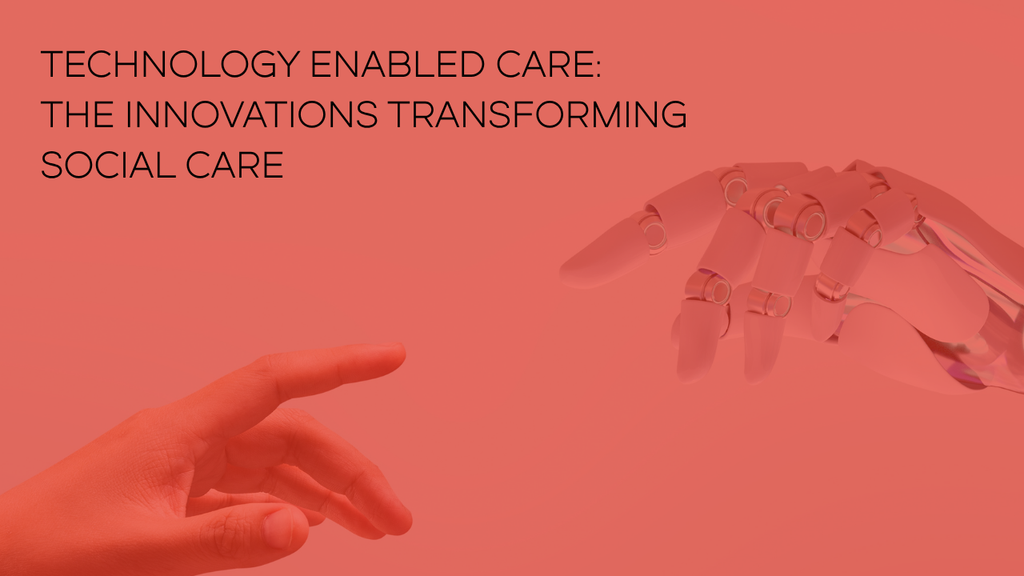
Technology enabled care is no longer a future concept for the social care sector, it’s already reshaping how providers support residents in elderly care and how they deliver care for people with learning disabilities.
From remote monitoring to AI companion robots that can flag early signs of cognitive decline, the innovations reaching care settings today are changing what “good care” looks like, and what skills providers need on their teams to deliver it.
What Is Technology Enabled Care?
Technology enabled care, often shortened to TEC, refers to the use of digital tools, sensors, wearables and connected devices to support people’s health, independence and wellbeing, either in their own home or within a care setting.
It covers everything from simple telecare alarms through to sophisticated remote monitoring platforms and AI-driven companion devices.
TEC isn’t about replacing care staff. It’s about giving care teams better information, earlier, so they can act on it and giving residents more independence and connection along the way.
Innovations Transforming Elderly Care
In elderly care, technology enabled care innovation is moving fast, particularly around three areas:
Remote Monitoring and Fall Detection
Sensor-based systems can now track movement patterns, detect falls automatically, and alert care staff without a resident needing to press a button. This is particularly valuable overnight, when the risk of an unwitnessed fall is highest.
Wearables and Passive Health Tracking
Devices worn on the wrist or clipped to clothing can track activity levels, sleep patterns and vital signs, building a baseline that makes it easier to spot when something changes, often before a resident or their family would notice themselves.
AI Companion Robots
Perhaps the most significant shift is the emergence of companion robots designed specifically for cognitive wellness.
One example is CC by Machani Robotics a desk-sized companion robot that sits in a resident’s room and talks with them about their day, their family and their memories.
What makes CC particularly interesting from an innovation standpoint is what happens behind that conversation. Every interaction is logged and analysed by an enterprise platform that surfaces engagement and mood trends to the care team, giving staff a mobile dashboard showing which residents may need attention, based on patterns in how they’re engaging day to day.
Early, gradual changes in conversation, memory recall or mood, the kind of subtle shifts that can signal cognitive or physical decline, become visible to a care team long before they’d typically be picked up in a routine check-in.
It’s important to be clear about what this kind of technology is and isn’t. CC isn’t a medical device, doesn’t monitor vital signs, and doesn’t replace nursing or care staff, it’s a cognitive wellness and companionship tool that supports the team around a resident.
Used well, tools like this don’t reduce the need for skilled care staff, they free them up to spend their time where it matters most, by reducing the manual guesswork in identifying who needs attention.
Innovations Supporting People with Learning Disabilities
Technology innovation for people with learning disabilities is a smaller but equally important space.
Assistive technology here tends to focus on communication, independence and sensory regulation including tools like symbol-based communication apps, visual schedule software that helps build predictable daily routines, and sensory technology that supports emotional regulation in calming spaces.
Digital care planning tools are also increasingly used across learning disability services to give support workers a clearer, shared view of a person’s goals, preferences and progress, reducing reliance on paper-based systems and making handovers between shifts more consistent.
While search demand in this space is lower than in elderly care technology, the underlying need is just as real: better tools for building independence, communication and consistency of support.
What This Means for The Social Care Workforce
None of this technology works without the right people behind it. Every innovation described here, from remote monitoring platforms to AI companion robots, depends on care staff who know how to interpret the data, respond to what it’s telling them, and keep the human relationship at the centre of care.
That’s shifting what social care providers need to hire for. Alongside traditional care and nursing skills, providers are increasingly looking for staff and leaders comfortable working alongside digital tools, interpreting engagement and wellbeing data, and championing technology adoption within their teams, without ever losing sight of the fact that technology supports care, it doesn’t replace it.
How Practicus Can Help
Practicus recruits across Health and Social Care, including into organisations embracing technology enabled care, from frontline and leadership roles in elderly care and learning disability services, through to the innovators building the technology itself, including our work with Machani Robotics.
We understand both sides of this shift: the traditional skills social care has always needed, and the emerging capability providers now need to make the most of the technology reaching their sector.
If you’re recruiting into social care and want a partner who understands where the sector is heading, talk to our team.
Get in touch!
ABOUT PRACTICUS
You can find out more about us on the about us page
Check out our latest insights here:
- Water Infrastructure Investment: Why the Sector Is Still Playing Catch-Up
- HR Roundtable: The People Challenges Shaping Pharma and Life Sciences Right Now
- How to Reduce Time to Hire Without Sacrificing Quality
- How Dr Google Is Changing the Way We Seek Healthcare
- Driving Change: Tackling Public Sector Recruitment Challenges